Care Guides
Why do shoes wear out faster in Dubai heat and dust?
Shoes wear out faster in Dubai because three things act on them at once: fine airborne dust that behaves like a mild abrasive, heat that softens the adhesives holding a shoe together and dries out the hide, and the constant swing between humid outdoor air and dry air conditioning that cycles moisture in and out of the leather. Individually none of them is dramatic. Together they compress the useful life of a good pair by years.
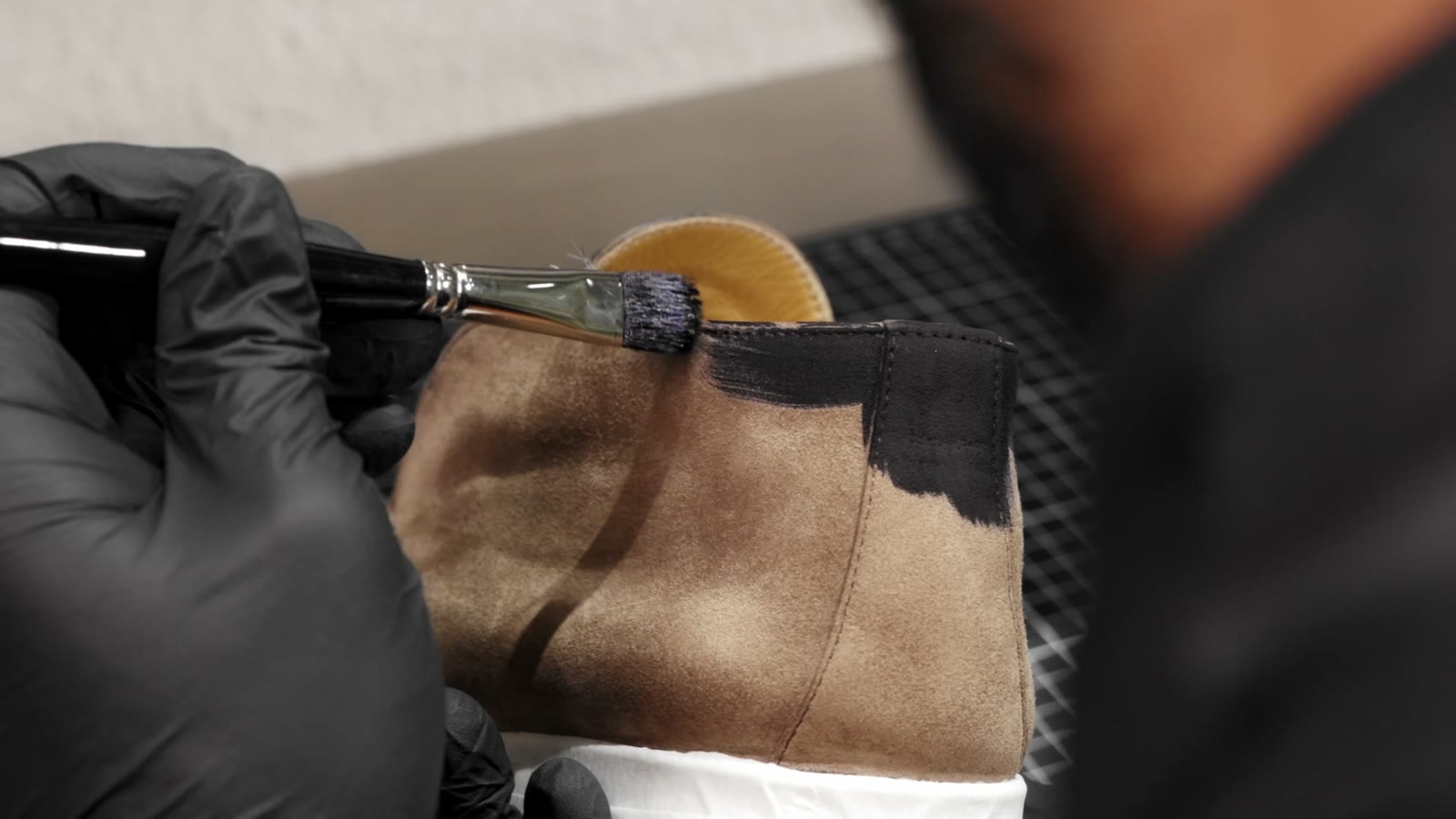
Dust is not dirt, it is abrasive
The dust here is fine, mineral and constant. It settles into the grain of leather, the nap of suede and the channels of stitching, and then it stays there. Every time the shoe flexes, which is every step, those particles move against the fibres around them.
That is the part people miss. A dusty shoe is not simply a shoe that looks dull; it is a shoe being sanded from the inside of its own grain. It is why a pair worn daily and never brushed develops a tired, slightly grey cast that survives cleaning: the surface has actually been abraded, not just soiled.
The fix is unglamorous and takes thirty seconds. Brush your shoes when you take them off, not when they look dirty. A horsehair brush for smooth leather, a brass or rubber brush for suede. You are removing the abrasive before it gets worked in, which is a completely different job from removing it afterwards.
Heat attacks the parts you cannot see
Most of a modern shoe is held together with adhesive: the sole to the upper, the heel covering to the block, crystals to their settings. Those adhesives have a working temperature range, and the inside of a parked car in a Dubai summer sits well above it.
A shoe that has spent an afternoon in a boot may come out with a sole edge that has begun to lift, a heel covering that has slipped a millimetre, or stones that were secure last week and are loose today. None of it is visible at the time. It shows up a fortnight later as a failure that seems to have come from nowhere.
Heat also drives moisture out of leather faster than the hide can be replenished by its own oils. Dried leather loses flexibility, and flexibility is what stops a vamp crease from becoming a vamp crack. This is the mechanism behind the single most common irreparable shoe failure we see.
Two habits solve most of it: do not store shoes in a car, and condition leather more often than you would in a temperate climate. Every six to eight weeks for a pair in regular rotation is not excessive here.
The air-conditioning cycle
Step outside in August and the air is humid. Step into a lobby and it is dry and cold. Your shoes make that transition several times a day, and leather responds to it, taking up moisture, giving it back, swelling fractionally and contracting again.
Repeated enough times, this cycling is what loosens the bond between a leather sole and its insole, and what causes lining to separate at the heel counter. It is also why shoes stored in a cold, dry wardrobe all summer can come out stiffer than they went in.
Cedar shoe trees do more here than they do in a mild climate. They absorb the moisture a shoe takes on during wear, hold the shape while the leather is still relaxed, and stop the vamp setting into a crease. If you buy one thing for your shoes this year, buy trees before you buy polish.
What this means for suede specifically
Suede has the hardest time of it. The nap is a raised fibre surface, and fine dust settles into it and is then crushed flat by wear. That flattening is what reads as a dirty suede shoe long before the shoe is genuinely soiled.
This is also why brushing suede carelessly can make it look worse, dragging crushed, dust-laden fibres in the wrong direction rather than lifting them. Brush in one direction, with the correct brush, and finish with the nap laid the same way across the whole shoe so it reads evenly under light.
A protector is not optional for suede in Dubai. It keeps dust sitting on the surface where a brush can remove it, rather than migrating into the nap where it cannot. In practice it roughly halves how often a suede shoe needs professional cleaning.
A realistic maintenance rhythm
After each wear: brush, and put trees in. Thirty seconds.
Every six to eight weeks: condition smooth leather, re-apply protector to suede. Fifteen minutes for several pairs at once.
Every month: look at your heel tips. If you can see any metal, or the tip has gone oval rather than round, it is overdue. Replacing a tip is the cheapest repair there is; rebuilding the heel block it was protecting is not.
Two to three times a year: professional clean for pairs in regular rotation. More for suede worn frequently, less for occasion shoes that live in a dust bag.
When to stop maintaining and start repairing
Cleaning removes what sits on and in the leather. It does not replace what has gone. Once colour has been abraded off a toe, once a sole has separated, once a vamp has cracked rather than creased, you are past maintenance.
The good news is that almost all of it is repairable if you act before the structure goes. A sole caught early is a re-glue; caught late it is a replacement. A cracked fold is a fill and re-colour; left, it splits through and becomes a patch.
If you are not sure which side of that line a pair is on, send photographs. We will tell you honestly, including when the answer is that they need nothing more than a brush and a fortnight of not being left in the car.
John White
Founder, FRSHR. Writes on leather, materials and the realities of caring for luxury pieces in a desert climate.
About the authorServices mentioned